eng
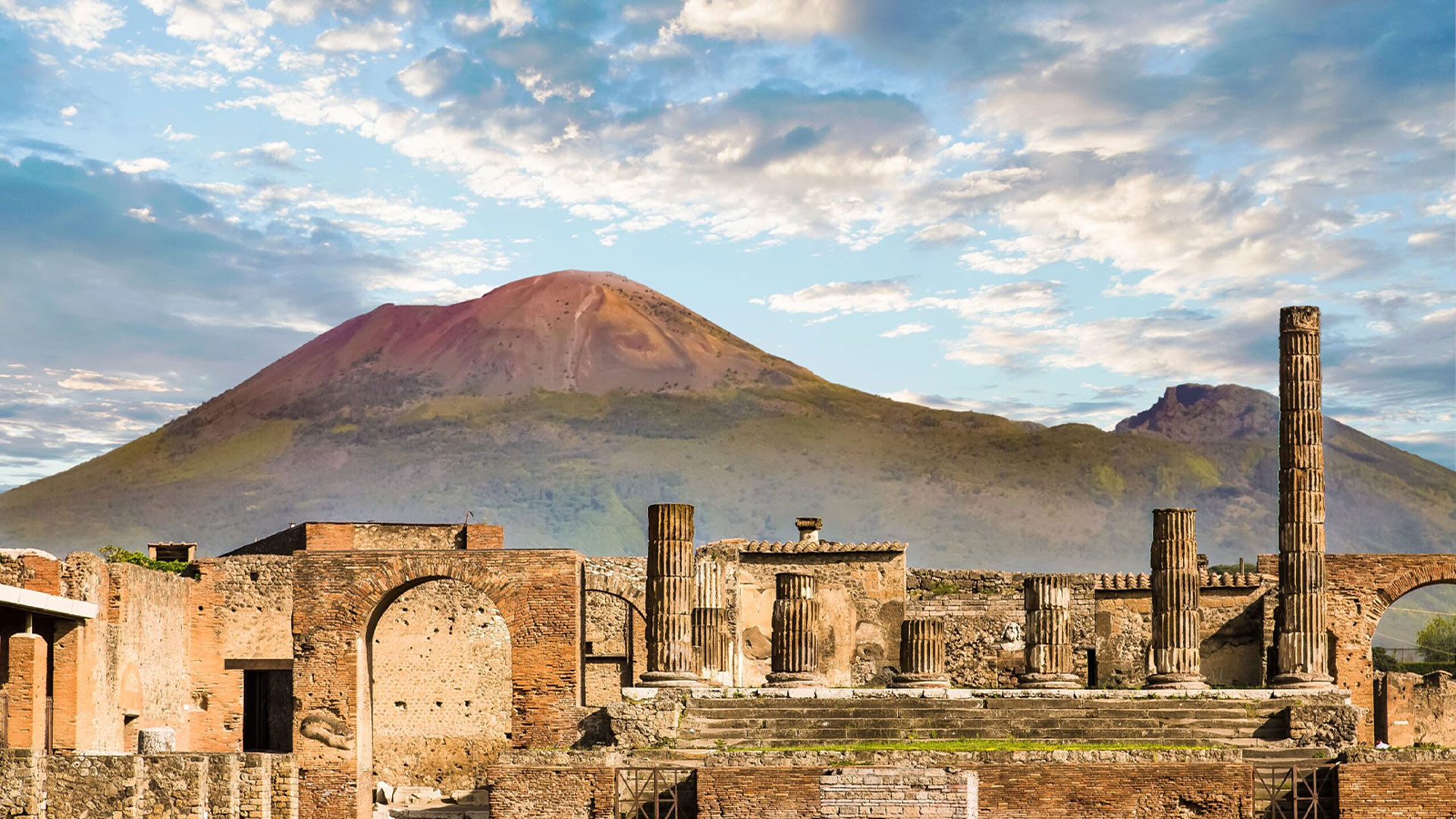
Staying at Villa Coralia is like opening a window onto the Mediterranean and the past: an enchanting setting between sky and sea, just a few minutes from some of the most extraordinary archaeological sites of the ancient world… Less than an hour’s drive from our residence lies a UNESCO World Heritage Site that has withstood the test of time: Pompeii, Herculaneum, and Torre Annunziata, silent guardians of daily life in ancient Rome.
Pompeii: The City Frozen in Time
Among the ruins of Pompeii, time stood still on a morning in 79 A.D., when Mount Vesuvius erupted violently and buried the entire city under ash and lapilli. Today, strolling through its streets is like turning the pages of a living book, written in stone, frescoes, and mosaics.
Pompeii was a vibrant city with over 20,000 inhabitants—merchants, patricians, artisans, and slaves. It was a strategic and wealthy port city, as evidenced by its amphitheaters, theaters, thermal baths, shops, and sumptuous villas. Don’t miss:
Villa of the Mysteries
A place where time seems to have stood still. This villa takes its name from the cycle of paintings decorating one of its rooms, depicting mysterious Dionysian rites. An extraordinarily well-preserved work that reveals the religious traditions and mysteries of ancient Rome.
Forum
The beating heart of Pompeii, where the city’s social and political life intertwined on a daily basis. In this vibrant space, where religious ceremonies were celebrated and public activities took place, the temples of Jupiter and Apollo stand majestically, bearing witness to the city’s grandeur.
House of the Faun
One of the most magnificent residences of antiquity, the House of the Faun is a true jewel of architecture and art. With its 3,000 square meters of floor space, this villa offers an unparalleled testament to the wealth and refined taste of the Roman nobility, featuring splendid mosaics and frescoes.
Garden of the Fugitives
A poignant memorial site, where the casts of the eruption’s victims tell stories of courage and despair. The last people who attempted to flee the disaster were trapped forever in their tragic escape, a silent yet powerful reminder of the tragedy.
Teatro Grande and Teatro Piccolo
These two extraordinarily well-preserved theaters offer a glimpse into the culture and entertainment of ancient Rome. The imposing Teatro Grande could seat up to 5,000 spectators, while the Teatro Piccolo was the venue for more intimate performances and musicals.
Pompeii captivates visitors with its contrast between millennia-old ruins and a vitality that can still be felt today, amplified by its proximity to the modern city and the Shrine of the Blessed Virgin of the Rosary, a pilgrimage destination for people from all over the world.
Herculaneum: The Hidden Gem
More intimate and better preserved, Herculaneum is often less crowded but just as emotionally and historically powerful. The city, once a small seaside village inhabited by about 4,000 people, was a vacation destination for the Roman aristocracy. Its destruction was different: not ash, but a pyroclastic flow sealed it under 20 meters of volcanic material, ensuring its incredible preservation.
Walking along the Decumanus Maximus, the main street that runs through the archaeological site from one end to the other, you’ll discover shops, private homes, taverns, and even charred wooden furniture, still in their original places. Some must-see highlights:
House of the Deer
A corner overlooking the sea, featuring mythological frescoes and an enchanting garden. The House of the Deer reveals the magnificence of Roman residences and their connection to nature.
House of the Wooden Partition
An extraordinary example of Roman architecture, famous for its perfectly preserved wooden partition wall, which transports us into the intimacy of Roman domestic life.
Thermopolium
One of the most fascinating and revealing sites of daily life in Herculaneum: the ancient Roman fast-food joint. Here, Romans would stop for a quick meal, purchasing food and drinks from a counter that’s still perfectly preserved, complete with intact terracotta jars.
Villa dei Papiri
One of the most magnificent residences in Herculaneum, famous for its unique library. A place that blends luxury and culture, bearing witness to the Romans’ passion for knowledge.
Suburban Baths
A bath complex decorated with exquisite mosaics, where the Romans relaxed and rejuvenated, appreciating both luxury and physical well-being.
The atmosphere is intimate, almost suspended in time. It takes just three hours to see it all, but the memories will last much longer.
Torre Annunziata: The Luxury of Ancient Oplontis
Last but not least is Torre Annunziata, known in Roman times as Oplontis. It was not a city but rather a suburban area of nearby Pompeii, chosen by some of the wealthiest families in the Empire to build extraordinary villas overlooking the sea.
Here we find the magnificent Villa of Poppea Sabina, attributed to Emperor Nero’s second wife: a true masterpiece of Roman residential architecture, featuring spectacular frescoes depicting imaginary gardens, ornately decorated halls, and even a small thermal bath complex.
Just a short walk away, though not yet fully open to the public, lies the Lucius Crassus the Third's Villa, a more rustic yet equally fascinating site, featuring areas dedicated to agricultural and commercial activities.
One site, a thousand emotions
Pompeii, Herculaneum, and Torre Annunziata are not just archaeological excavations: they are windows onto a vanished civilization that still feels deeply close to us. Here, you can experience firsthand the beauty, fragility, and everyday life of the ancient world. From spirituality to mystery rites, from theaters to taverns, everything has been preserved over time thanks to the tragic yet preservative eruption of Vesuvius.
The Archaeological Park of Pompeii, which also includes Herculaneum and Oplontis, is today one of the most visited sites in the world, recognized by UNESCO for its outstanding universal value. Every year, millions of people visit not only to admire the art and architecture, but to experience a rare emotion: feeling part of a history that still lives on.
Villa Coralia’s Recommendation
For an even more immersive experience, we recommend hiring an expert guide: they’ll lead you to lesser-known spots, revealing forgotten stories, mysterious symbols, and details invisible to the casual observer.
Upon your return, let Villa Coralia—with its terrace overlooking the Gulf of Naples and Sorrento—treat you to the day’s final spectacle: the sun slowly setting behind Mount Vesuvius, painting the sky with history and light.
A stay here is not just a break from routine, but a profound journey through time, beauty, and the ancient soul of this land.
Book your journey into wonder today. The past awaits you, just a stone’s throw from Villa Coralia.